
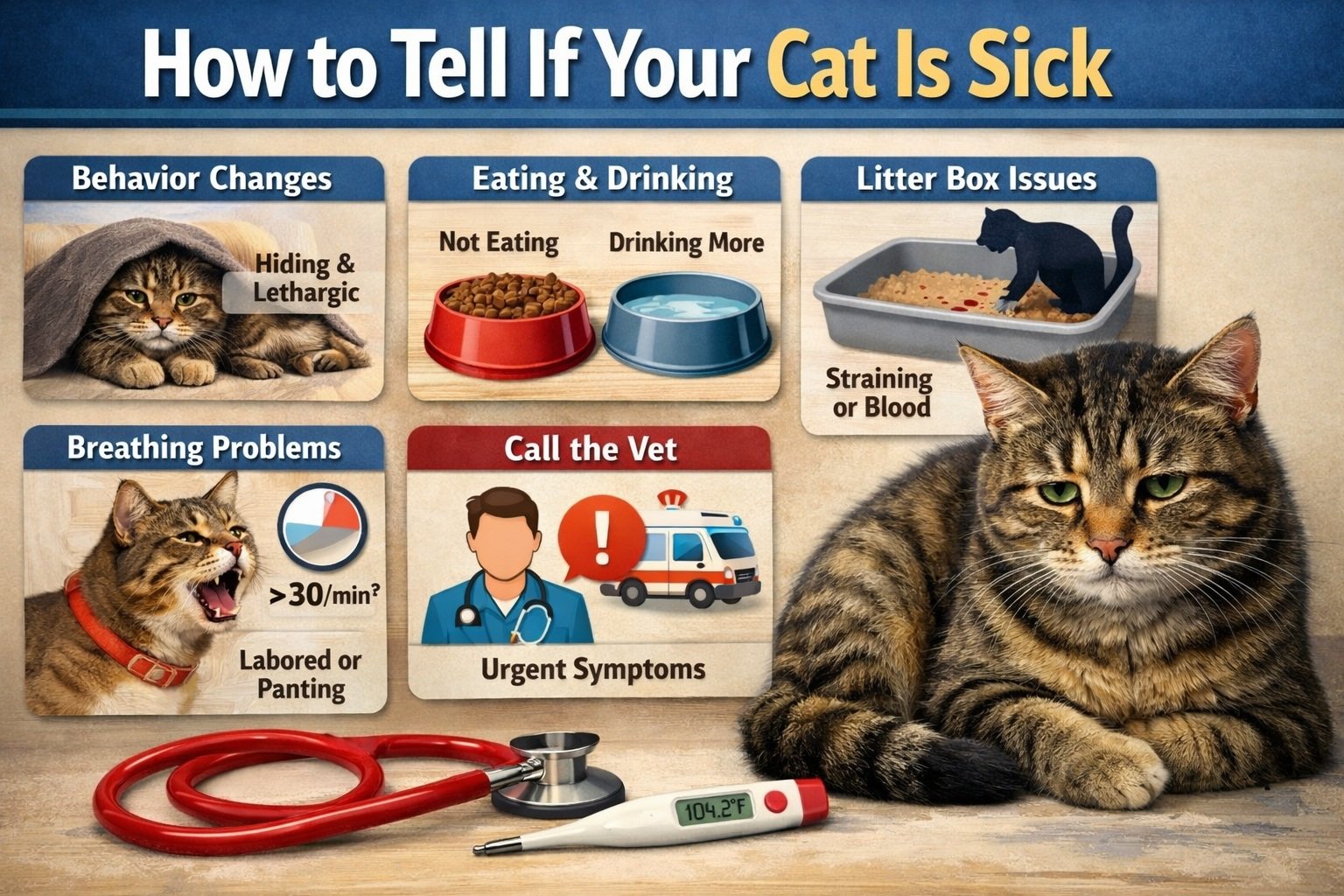

How to Tell If Your Cat Is Sick: A Pet Care Guide for Fast, Confident Decisions
You can tell if your cat is sick by spotting sudden changes in behavior, appetite, drinking, grooming, breathing, or litter box habits. Good pet care means comparing today’s patterns to your cat’s normal baseline, then acting quickly on red flags—especially breathing trouble, repeated vomiting, or inability to urinate.
Key Takeaways Table
| What to watch | What it often looks like | Why it matters | What to do |
|---|---|---|---|
| Behavior shift | hiding, less social, “not themselves” | cats mask illness; subtle = meaningful | note timing + other signs |
| Eat/drink change | eating less, drinking more, sudden weight loss | dehydration, kidney/thyroid/diabetes risk | monitor 24 hours; call vet sooner if worsening |
| Litter box change | straining, blood, no pee, diarrhea | urinary blockage can be life-threatening | urgent vet if straining/no urine |
| Breathing change | rapid, effortful, open-mouth breathing | low oxygen / respiratory distress | urgent vet immediately |
| “Vitals” off | fever, abnormal resting breathing rate | objective data beats guessing | record numbers + call vet |
What does it mean when a cat is “sick,” and why are the signs easy to miss?
A cat is “sick” when its body or behavior changes because a disease, infection, pain, or organ problem is disrupting normal function—and the signs are easy to miss because cats instinctively hide weakness. The most reliable clue is a pattern change: appetite, energy, grooming, sociability, breathing, and litter box habits shifting from baseline.
What “baseline” means in pet care
Baseline is your cat’s normal routine, including:
Food: how much and how fast they eat
Water: typical drinking
Litter box: frequency, volume, and consistency
Energy: play, jumping, sleeping spots
Temperament: social vs. withdrawn
Why “any sudden change” matters
Veterinary guidance is consistent: illness often shows up first as changes in appearance, energy, appetite, litter box usage, or breathing. Treat sudden change as a signal to observe closely and act.
How can you do a quick pet care health check at home?
You can do a fast pet care check by running a “head-to-tail + intake/output” scan once daily for 3 minutes: observe breathing, eyes/nose, mouth/gums, coat, belly comfort, appetite/water, and litter box output. This works because early illness is usually a cluster of small changes, not one dramatic symptom.
Step-by-step: the 3-minute “Sick Cat Scan”
Watch breathing at rest (30 seconds). Count chest rises. Note effort/noise.
Check face: eyes, nose, and any discharge or squinting.
Look at mouth/gums (if safe): pale, blue-tinged, or very sticky gums are concerning.
Run your hands along the body: new lumps, tenderness, or a “tense” belly.
Coat + grooming: sudden greasiness, matting, or overgrooming spots.
Food + water: compare to normal; note refusal or sudden thirst.
Litter box: urine amount/straining; stool changes; accidents.
Comparison table: Normal vs. Concerning (quick triage)
| Check | Usually normal | Concerning (call vet sooner) |
|---|---|---|
| Temperature | 100.5–102.5°F (38.1–39.2°C) | persistent >102.5°F or very low temp |
| Resting breathing | typically ~15–30/min when calm/sleeping | consistently >30/min or labored breathing |
| Energy | normal naps + normal play interest | hiding, lethargy, less jumping |
| Appetite | steady eating routine | not eating, eating much less, or sudden food aversion |
| Litter box | consistent urine/stool pattern | straining, blood, diarrhea, no urine |
Which symptoms mean “call the vet now,” and which can be monitored?
Call a veterinarian now when signs suggest airway/oxygen problems, severe pain, dehydration, toxin exposure, or urinary blockage—because delay can quickly become dangerous. Monitor mild, single-episode issues only if your cat is otherwise normal, still drinking, breathing comfortably, and symptoms resolve within 12–24 hours without worsening.
“Call now / emergency” red flags (do not wait)
Open-mouth breathing, panting, or obvious breathing struggle
Resting breathing rate consistently >30/min or rapidly rising trend
Straining to urinate, crying in litter box, or no urine output
Collapse, seizures, severe weakness, or unresponsiveness
Repeated vomiting, vomit with blood, or black/tarry stool
Pale/blue gums or severe dehydration signs (very tacky gums)
Suspected toxin ingestion (plants, human meds, chemicals)
“Monitor briefly” (with strict boundaries)
You can monitor for 12–24 hours when all are true:
breathing is calm and comfortable
your cat is alert enough to respond normally
eating/drinking is only slightly reduced (not absent)
there is no straining to urinate and no severe diarrhea/vomiting
If anything worsens, switch to “call now.”
Pro tips that improve decision-making (information gain)
Treat the litter box like a vital sign. Track urine clumps and stool consistency daily.
Weigh weekly. Small losses are easy to miss under fur; trends matter more than one reading.
Record 3 numbers when worried: temperature, resting breaths/min, and “last normal pee.”
Add a trust signal for editors: AAHA/AAFP guideline excerpt on visit frequency and early detection.
Add clinic authority: Veterinarian on why cats mask illness and why early evaluation changes outcomes.
How often should “healthy” cats be checked?
At least annual exams are recommended as a minimum.
Senior cats should be seen at least every 6 months, and more often with chronic conditions.
Frequently Asked Questions
What are the earliest signs my cat is sick?
The earliest signs are usually routine changes—less social behavior, hiding, reduced appetite, subtle litter box differences, and lower play interest—because cats often don’t show dramatic symptoms at first. Use a baseline mindset: if something changes suddenly and persists beyond a day, treat it as meaningful.
Watch for clusters of changes (behavior + appetite + litter).
Write down start time and progression before calling the vet.
How do I tell if my cat’s breathing is an emergency?
Breathing is an emergency when it’s fast at rest, looks effortful, or includes open-mouth breathing—because these can signal respiratory distress and low oxygen. Count breaths while sleeping; persistent rates above ~30/min or any obvious struggle needs urgent care.
Don’t stress your cat with forced handling.
Transport calmly and keep them cool and quiet.
When should I worry if my cat stops eating?
You should worry quickly if your cat stops eating because prolonged appetite loss can worsen illness and leads to rapid decline in some cats. If your cat refuses food entirely, is vomiting, seems painful, or is acting “off,” contact a veterinarian the same day rather than waiting.
Note: appetite loss + hiding + litter changes is a high-signal combo.
Actionable next steps
Do a 3-minute daily scan (breathing, face, body, food/water, litter box).
Track baseline with 3 notes: appetite, urine/stool, energy.
Use objective thresholds: normal temp range and resting breaths/min.
Escalate immediately for breathing trouble, urinary straining/no urine, collapse, repeated vomiting, or severe weakness.
When in doubt, call your veterinarian—good pet care is acting early, not proving you’re right.